Top Features Every Modern Learning Management System Should Have in 2026
Posted on : 28 July, 2026
Employee training has evolved significantly over the past decade. Organisations are no longer relying solely on classroom sessions, printed manuals, or occasional workshops to develop their workforce. As businesses become increasingly digital, continuous learning has become essential for maintaining productivity, improving employee performance, and adapting to changing industry requirements. A Learning Management System (LMS) has become the foundation of this transformation. It enables organisations to deliver, manage, and monitor training through a single digital platform while providing employees with flexible access to learning resources.
However, not every LMS offers the same capabilities. Modern businesses require more than a platform that simply hosts online courses. Today's Learning Management Systems must support automation, data-driven decision-making, personalized learning, mobile accessibility, and seamless integration with other business applications. Choosing an LMS based only on price or basic functionality may solve immediate training requirements but often creates limitations as organisations grow. Understanding the features that truly matter helps businesses select an LMS that supports long-term learning strategies rather than short-term training needs.
Why LMS Features Matter More Than Ever
The expectations placed on corporate learning have changed. Businesses now need to onboard employees faster, keep teams updated with new technologies, ensure regulatory compliance, and support continuous professional development. At the same time, employees expect learning experiences that are flexible, engaging, and accessible from any device.
An LMS that lacks modern capabilities can create challenges such as:
- inconsistent learning experiences
- limited reporting
- poor learner engagement
- increased administrative work
- difficulty measuring training effectiveness
Modern LMS platforms address these challenges by combining intelligent automation, analytics, collaboration tools, and personalised learning experiences. Instead of functioning as a simple content repository, they become strategic platforms that contribute to workforce development and organisational growth.
1. User-Friendly Interface
One of the most important features of any Learning Management System is ease of use. Regardless of how many advanced capabilities an LMS offers, employees are unlikely to engage with the platform if it is difficult to navigate.
A well-designed interface should allow learners to:
- access courses easily
- locate training materials quickly
- track their learning progress
- complete assessments without confusion
Similarly, administrators should be able to:
- create courses
- assign learning paths
- manage users
- generate reports
Without requiring extensive technical expertise. Simple navigation reduces frustration while encouraging higher learner participation. A clean, intuitive interface also reduces the amount of training required before employees can begin using the system effectively.
2. Mobile Learning Support
The modern workforce is no longer limited to office environments. Remote employees, field teams, travelling professionals, and hybrid workforces all require access to learning resources regardless of location. A modern LMS should provide responsive mobile experiences through web platforms or dedicated applications.
Mobile learning allows employees to:
- complete courses during travel
- review training materials on demand
- access learning resources outside traditional working hours
- continue professional development from any location
This flexibility improves learner engagement while making training more accessible. Businesses also benefit because learning becomes less dependent on scheduled classroom sessions. As workplace flexibility continues to increase, mobile accessibility has become an essential rather than optional LMS feature.
3. AI-Powered Personalised Learning
Artificial intelligence is transforming how organisations deliver employee training. Instead of presenting identical learning content to every employee, modern LMS platforms increasingly personalise learning experiences based on individual needs.
AI can analyse factors such as:
- previous learning history
- assessment performance
- job role
- skill gaps
- learning behaviour
Based on these insights, the LMS can recommend relevant courses, adjust learning paths, and provide targeted learning resources. This creates more engaging learning experiences because employees receive content that matches their professional development requirements. Businesses exploring the growing role of AI tutors in LMS are already seeing how intelligent recommendations and personalised guidance improve learner engagement and knowledge retention. Personalisation also helps organisations reduce unnecessary training while ensuring employees focus on the skills most relevant to their responsibilities.
4. Learning Analytics and Reporting
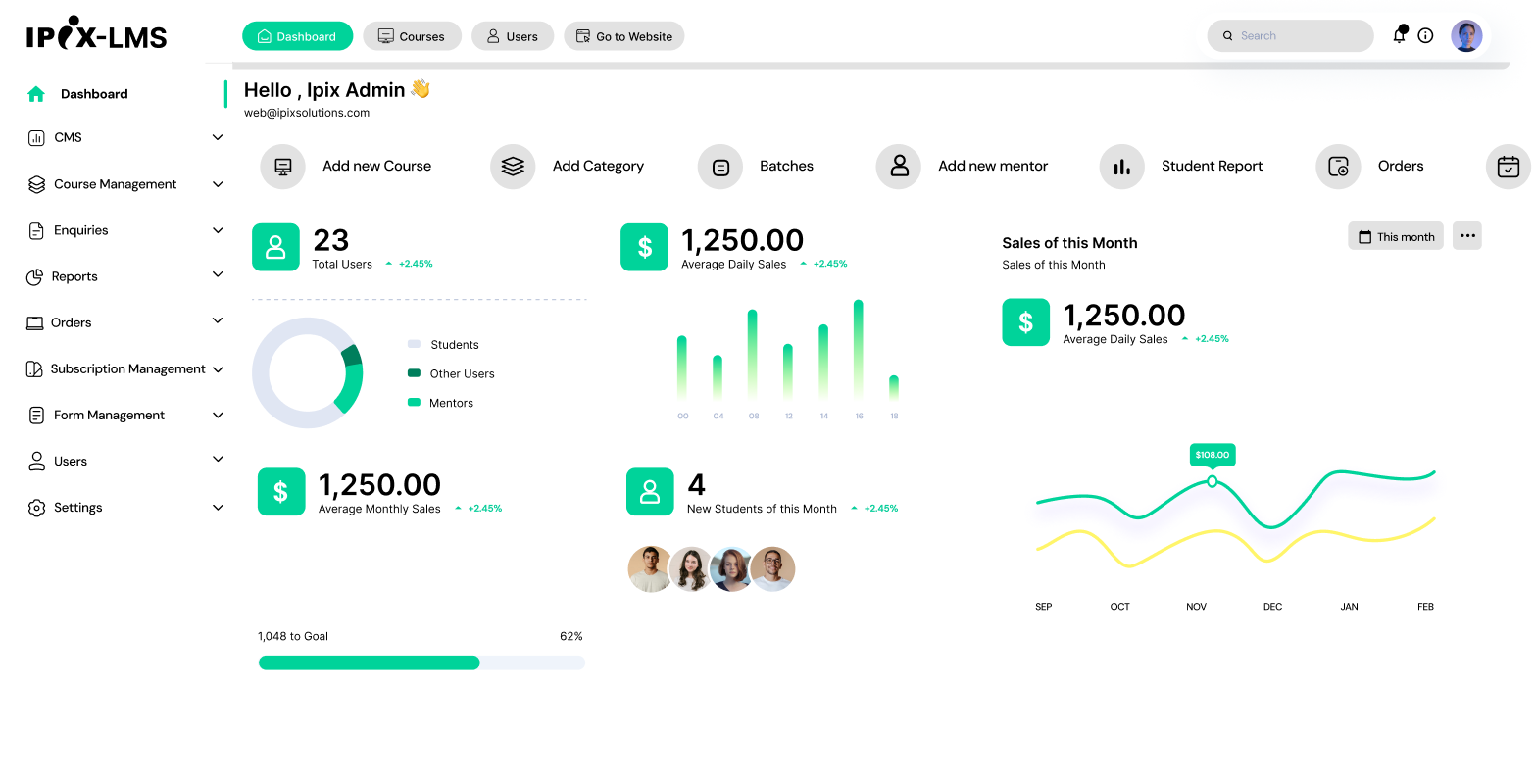
Training programmes generate valuable information, but that information only becomes useful when businesses can analyse it effectively. Modern Learning Management Systems provide comprehensive reporting capabilities that allow organisations to monitor learning performance in real time.
Typical dashboards include:
- course completion rates
- assessment scores
- learner engagement
- certification progress
- department-wise performance
- compliance status
These insights help learning managers identify areas where employees require additional support. Analytics also improves strategic decision-making. Instead of relying on assumptions, organisations can evaluate how learning programmes contribute to workforce development. Businesses interested in measuring LMS ROI often use these reporting capabilities to understand how training influences productivity, engagement, and operational performance. Accurate reporting transforms learning from an administrative function into a measurable business investment.
5. Assessments and Certification Management
Learning should always include measurable outcomes. Modern LMS platforms therefore provide integrated assessment tools that evaluate learner understanding throughout the training process.
Assessments may include:
- quizzes
- practical assignments
- scenario-based evaluations
- final examinations
Automated grading simplifies administration while providing immediate feedback to learners. Certification management is equally important. After completing required courses, employees should receive digital certificates that are securely stored within the LMS. Certification tracking also helps organisations manage compliance requirements by monitoring renewal dates and mandatory training completion. Automated reminders ensure certifications remain current without requiring constant manual supervision. This improves organisational readiness while reducing administrative workload.
6. Automation and Workflow Management
Managing employee training manually becomes increasingly difficult as organisations grow. HR teams often spend significant time assigning courses, sending reminders, monitoring completion, issuing certificates, and preparing reports. While these tasks are essential, they can quickly become repetitive and time-consuming. A modern Learning Management System should automate these routine processes.
Workflow automation allows administrators to:
- assign courses automatically based on employee roles
- schedule mandatory compliance training
- send learning reminders
- notify managers about overdue courses
- generate certificates automatically
- track completion without manual intervention
Automation not only saves administrative time but also ensures greater consistency across the organisation. For example, when a new employee joins the company, the LMS can automatically assign onboarding courses, schedule assessments, notify supervisors, and generate certificates after successful completion. This reduces delays while creating a more structured learning experience. Automation also minimises the risk of missed training deadlines and incomplete compliance records. As organisations expand, workflow automation becomes one of the most valuable features of a modern LMS because it improves operational efficiency without increasing administrative workload.
7. Integration with Business Systems
Training should never operate in isolation. A Learning Management System delivers greater value when it connects seamlessly with the other software platforms used across the organisation.
Modern LMS platforms should support integration with systems such as:
- Human Resource Management Systems (HRMS)
- Enterprise Resource Planning (ERP)
- Customer Relationship Management (CRM)
- Microsoft Teams
- Google Workspace
- Zoom
- Microsoft Outlook
- Single Sign-On (SSO)
These integrations eliminate duplicate data entry while ensuring information remains consistent across departments. For example, when a new employee is added to the HR system, the LMS can automatically create a learner profile, assign mandatory courses, and notify the employee without requiring manual intervention. Similarly, managers can monitor employee development using data that is synchronised across business systems. Integration creates a more connected digital workplace where learning becomes part of everyday business operations instead of functioning as a separate process.
8. Flexible Content Management
Every organisation has unique learning requirements. Some businesses require compliance courses, while others focus on technical training, leadership development, customer service, or product knowledge. A modern Learning Management System should support different content formats and make updating learning materials straightforward.
An effective LMS should allow organisations to deliver:
- video lessons
- PDF documents
- presentations
- interactive learning modules
- SCORM content
- quizzes
- live virtual sessions
- recorded webinars
Administrators should also be able to organise learning into structured learning paths that guide employees through progressive skill development. Version control is another important feature. As business processes evolve, training materials need regular updates. The LMS should allow administrators to revise existing content without disrupting learner progress or creating duplicate courses. Flexible content management ensures the learning platform continues to meet changing organisational needs over time.
9. Security and Compliance
As businesses increasingly deliver training online, protecting learner information becomes a critical responsibility. A Learning Management System stores valuable organisational data, including employee information, assessment records, certifications, and compliance documentation.
Modern LMS platforms should therefore include strong security features such as:
- secure user authentication
- role-based access control
- encrypted data storage
- secure cloud hosting
- regular data backups
- audit logs
For organisations operating in regulated industries, compliance features are equally important. The LMS should help businesses:
- maintain training records
- track mandatory certifications
- generate audit reports
- monitor compliance completion
- store historical learning data
Strong security and compliance capabilities protect organisational information while supporting regulatory requirements. Selecting an LMS with robust security features helps organisations minimise operational risk and build greater confidence in digital learning.
10. Scalability and Customisation
Business requirements rarely remain static. As organisations grow, they hire more employees, introduce new products, expand into additional markets, and create new training programmes. A modern Learning Management System should be capable of growing alongside the organisation.
Scalability allows businesses to:
- support increasing numbers of learners
- add new departments
- create additional learning programmes
- manage multiple locations
- deliver multilingual training
Customisation is equally valuable. Every organisation has unique branding, workflows, reporting requirements, and learning objectives.
An LMS should allow businesses to customise:
- dashboards
- user roles
- learning paths
- branding
- reports
- notifications
- assessment settings
A scalable and flexible platform ensures businesses do not outgrow their LMS after only a few years. Instead, the system continues supporting organisational growth without requiring expensive platform migrations.
Common Mistakes When Choosing an LMS
Selecting a Learning Management System based only on feature lists can lead to disappointing results. Many organisations focus on the number of available features rather than evaluating whether those features solve real business challenges. One common mistake is prioritising cost over long-term value. A lower-cost LMS may initially appear attractive but may lack the automation, reporting, scalability, or integration capabilities required as the organisation grows. Another mistake is ignoring the learner experience. Employees are unlikely to engage with a platform that is difficult to navigate, regardless of how many advanced features it includes. Businesses should also avoid overlooking future requirements. An LMS selected solely for current training needs may become restrictive as learning strategies evolve.
Instead of asking, "What do we need today?", organisations should ask:
"Will this LMS continue supporting our business over the next five years?"
This long-term perspective often leads to better investment decisions.
Choosing an LMS That Supports Business Growth
Every organisation has different learning objectives, but the most successful LMS implementations share one characteristic. They align learning technology with business strategy. Rather than simply delivering online courses, modern Learning Management Systems help organisations:
- develop employee skills
- improve operational consistency
- reduce administrative effort
- support compliance
- strengthen workforce productivity
- make learning measurable
When these objectives are achieved, the LMS becomes a strategic business platform rather than just a training tool. Businesses should therefore evaluate platforms based not only on current functionality but also on their ability to support continuous improvement and future growth.
Conclusion
The best Learning Management Systems do much more than host online courses. They automate routine tasks, personalise learning experiences, provide meaningful analytics, integrate with existing business systems, and support long-term workforce development. Choosing an LMS with these modern capabilities enables organisations to deliver more effective training, improve employee engagement, simplify administration, and make better learning decisions based on real data. As business requirements continue to evolve, investing in a feature-rich and scalable LMS helps ensure that learning remains aligned with organisational goals and future growth.
At IPIX, we understand that every organisation has unique training requirements. Businesses looking for Learning Management System Software in India should consider solutions that combine intelligent automation, AI-powered learning, advanced analytics, seamless integrations, and scalable features to create measurable learning outcomes and long-term business value.








































 Talk to our Expert