Why Most Business Websites Fail (And What Good Web Development Fixes)

Posted on : 12 January, 2026
Websites play a central role in how modern businesses operate. They are used for communication, brand positioning, lead generation, and customer interaction. Despite this importance, many business websites fail to deliver consistent results.
Failure in this context does not imply technical breakdown or poor aesthetics. Most underperforming websites function as intended on the surface. Pages load, content is visible, and branding appears correct. The failure occurs at a deeper level, where the website does not support business objectives effectively.
In most cases, this gap can be traced back to decisions made during web development.
The Difference Between Presence and Performance
Having a website and having a website that performs are two different things.
A website with a presence exists online. A website with performance actively supports business goals. It attracts relevant users, guides them efficiently, and integrates smoothly with marketing and operational efforts.
Many business websites are built with an emphasis on launch rather than longevity. Once the site goes live, development decisions are rarely revisited, even as business needs evolve. Over time, this creates a mismatch between what the website can support and what the business requires.
Good web development treats a website as a system rather than a deliverable.
The Impact of Development Decisions Made Early
Many long-term website issues originate from decisions made during the earliest stages of development. Framework selection, content management systems, hosting environments, and architectural patterns are often chosen based on convenience rather than long-term suitability.
At launch, these choices may not appear problematic. The website loads, pages function, and initial requirements are met. However, as traffic increases, content expands, or new integrations are required, structural limitations begin to surface.
Early development decisions influence:
- how easily a website can be optimised later
- whether new features can be added without restructuring
- how well the site performs under higher traffic loads
- the complexity of long-term maintenance
Websites that fail to perform over time often do so not because of visible flaws, but because their foundations were not designed with growth in mind.
Design-Led Development and Its Limitations
Visual design is often the starting point for website projects. While design plays an important role in usability and perception, prioritising design without equal attention to structure and performance introduces long-term issues.
Design-heavy websites frequently encounter challenges such as:
- inefficient asset loading
- excessive client-side scripts
- reduced accessibility
- inconsistent behaviour across devices
These issues affect both user experience and technical performance. They are not design flaws in isolation but development trade-offs made to accommodate visual complexity.
Effective web development aligns design intent with technical feasibility, ensuring that aesthetics do not compromise usability or performance.
Website Performance as a Structural Concern

Page speed and responsiveness are critical factors in both user experience and search visibility. Slow-loading websites reduce engagement and increase abandonment rates, regardless of content quality.
Common performance issues originate from:
- unoptimised codebases
- improper handling of media assets
- lack of caching mechanisms
- inadequate server infrastructure
These are development-level considerations that cannot be resolved through content or marketing adjustments alone.
This is why performance optimisation must be embedded into the development process itself. A professional web development company in India typically addresses performance at the architectural level rather than treating it as a post-launch correction.
Understanding User Intent Through Structure
Many websites fail because they are structured around internal assumptions rather than user intent.
Content is often organised based on what the business wants to communicate, not how users navigate or process information. This leads to unclear pathways, overloaded pages, and ineffective calls to action.
Good web development translates intent into structure. Navigation systems, page hierarchy, and internal linking are designed to reduce cognitive load and guide users naturally through the site.
When structure reflects user behaviour, engagement improves without additional persuasion.
Content Delivery Depends on Development Structure
Content quality alone does not guarantee effectiveness. How content is delivered, organised, and rendered plays a significant role in how users engage with it.
Poor development structure can result in:
- content buried under complex navigation
- inconsistent formatting across devices
- accessibility limitations
- slow rendering that discourages reading
From a technical standpoint, development decisions affect how content is interpreted by browsers, assistive technologies, and search engines. Semantic markup, proper heading structures, and efficient rendering pipelines are essential for ensuring content is both readable and discoverable.
Good web development creates an environment where content performs as intended, rather than being constrained by technical inefficiencies.
Mobile Experience as a Development Responsibility

Mobile traffic accounts for a majority of website visits across industries. Despite this, mobile experience is still frequently treated as a secondary concern.
Issues commonly observed include:
- layouts that adapt visually but not functionally
- touch elements that lack spacing
- performance degradation on mobile networks
- inconsistent behaviour across devices
Responsive design alone does not guarantee usability. Mobile optimisation requires testing, refinement, and performance awareness at the development stage.
Search engines prioritise mobile-first indexing, making mobile experience both a usability and visibility concern.
Template-Based Development and Scalability Constraints
Templates and pre-built frameworks provide speed and cost efficiency, particularly for early-stage projects. However, they introduce structural limitations that become apparent as businesses grow.
Template-based websites may:
- restrict custom functionality
- limit optimisation options
- introduce unnecessary dependencies
- reduce flexibility for future changes
As requirements evolve, businesses often find themselves constrained by initial development shortcuts. At this stage, rebuilding becomes more complex than building correctly from the start.
This is a common reason businesses later engage a custom web development company in India to restructure their digital presence.
The Role of Development in SEO Outcomes
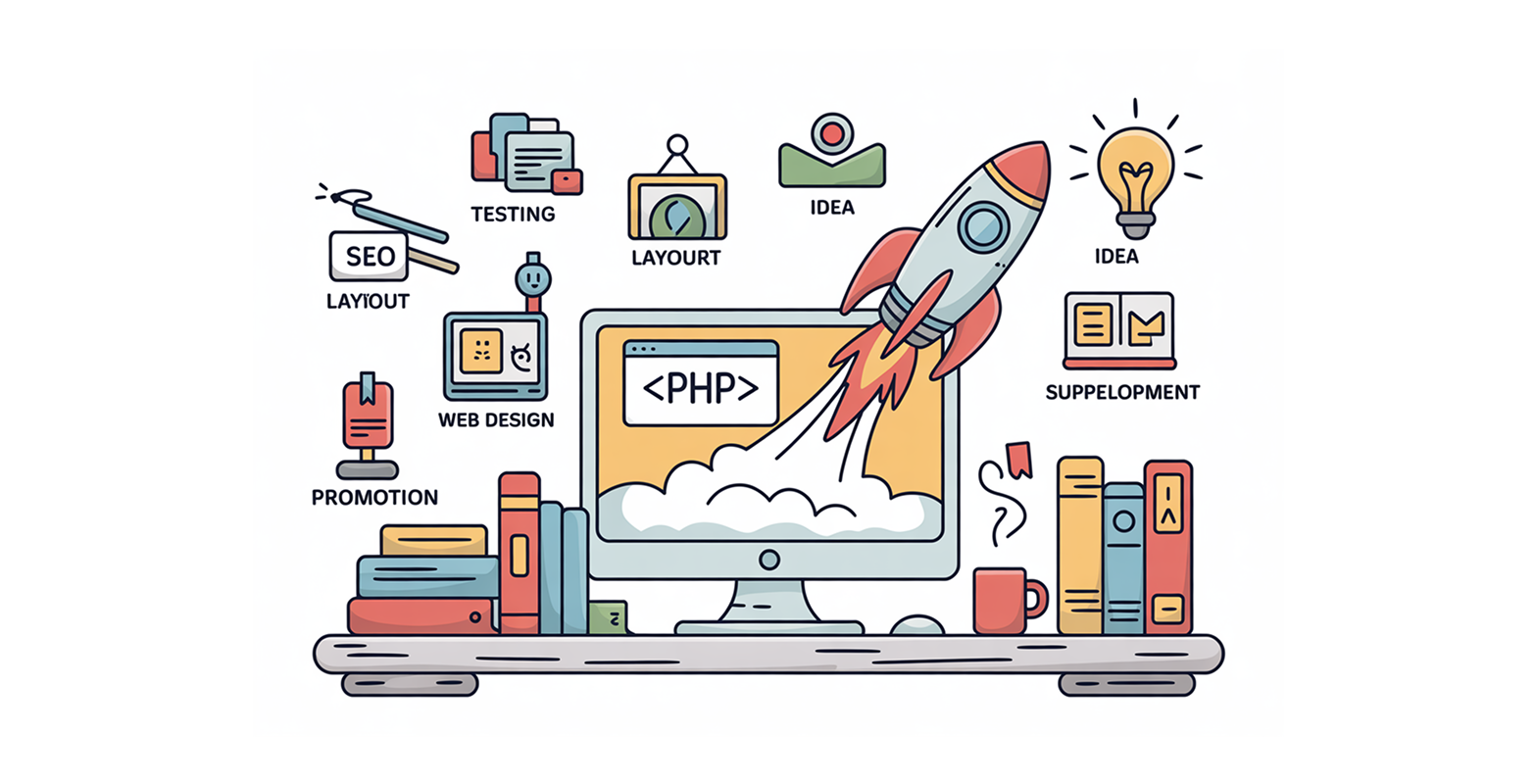
Search engine optimisation is influenced by more than content and keywords. Technical foundations play a significant role in how effectively search engines interpret and rank websites.
Development-related SEO factors include:
- semantic HTML structure
- logical URL hierarchies
- internal linking architecture
- script execution order
- server response behaviour
When these elements are poorly implemented, content visibility is affected regardless of quality.
Good web development integrates SEO considerations at the structural level, ensuring that content efforts are supported rather than constrained.
Security and Maintainability as Long-Term Factors
Websites are ongoing systems that require maintenance, updates, and monitoring. Development practices directly affect how stable and secure a website remains over time.
Common risks associated with weak development include:
- outdated dependencies
- insecure integrations
- limited update pathways
- increased vulnerability exposure
These issues affect trust, reliability, and operational continuity. Development decisions that prioritise short-term delivery over maintainability often lead to higher long-term costs.
Professional development focuses on sustainability rather than launch speed alone.
What Effective Web Development Enables
When web development is approached as a strategic process, it supports multiple business functions simultaneously.
Effective development enables:
- consistent performance across devices
- clear and predictable user journeys
- improved technical SEO foundations
- scalability for future requirements
- reduced maintenance complexity
Rather than reacting to problems, good development anticipates them.
Development as an Ongoing Discipline
Web development is not a one-time activity. It evolves alongside technology, user behaviour, and business strategy.
Websites that continue to perform well are typically those built with adaptability in mind. Their foundations allow for iteration without disruption.
This perspective is central to how experienced development teams approach long-term projects.
Measuring Website Effectiveness Beyond Traffic
Website success is often measured primarily through traffic volume. While traffic remains an important indicator, it does not accurately reflect how well a website supports broader business objectives or user outcomes.
The quality of web development directly influences deeper performance metrics such as how users interact with pages, how smoothly they move through navigation flows, the stability of conversion paths, the frequency of errors, and the overall reliability of the system over time.
Websites built on strong development foundations are easier to analyse, refine, and improve because they produce clearer and more consistent data signals. This allows teams to better understand user behaviour and make informed optimisation decisions.
When development quality is inconsistent or limited by early shortcuts, achieving this level of clarity becomes significantly more difficult.
Conclusion
Business websites fail not because of lack of effort, but because development decisions are often underestimated. A website is not simply a digital asset. It is a system that must balance design, performance, usability, and scalability. When these elements are misaligned, the website underperforms regardless of marketing investment.
At IPIX, web development is approached as a structured, strategic discipline. Each project is built with performance, usability, and long-term growth in mind, ensuring websites remain functional as business needs evolve.
For organisations looking to work with an IT company in India that delivers strategic web development as a long-term system rather than a short-term project, choosing a team with strong technical foundations and strategic thinking is essential.














































 Talk to our Expert