Claude vs ChatGPT for Business: Which AI Tool Delivers Better Results in 2026?
Posted on : 10 June, 2026
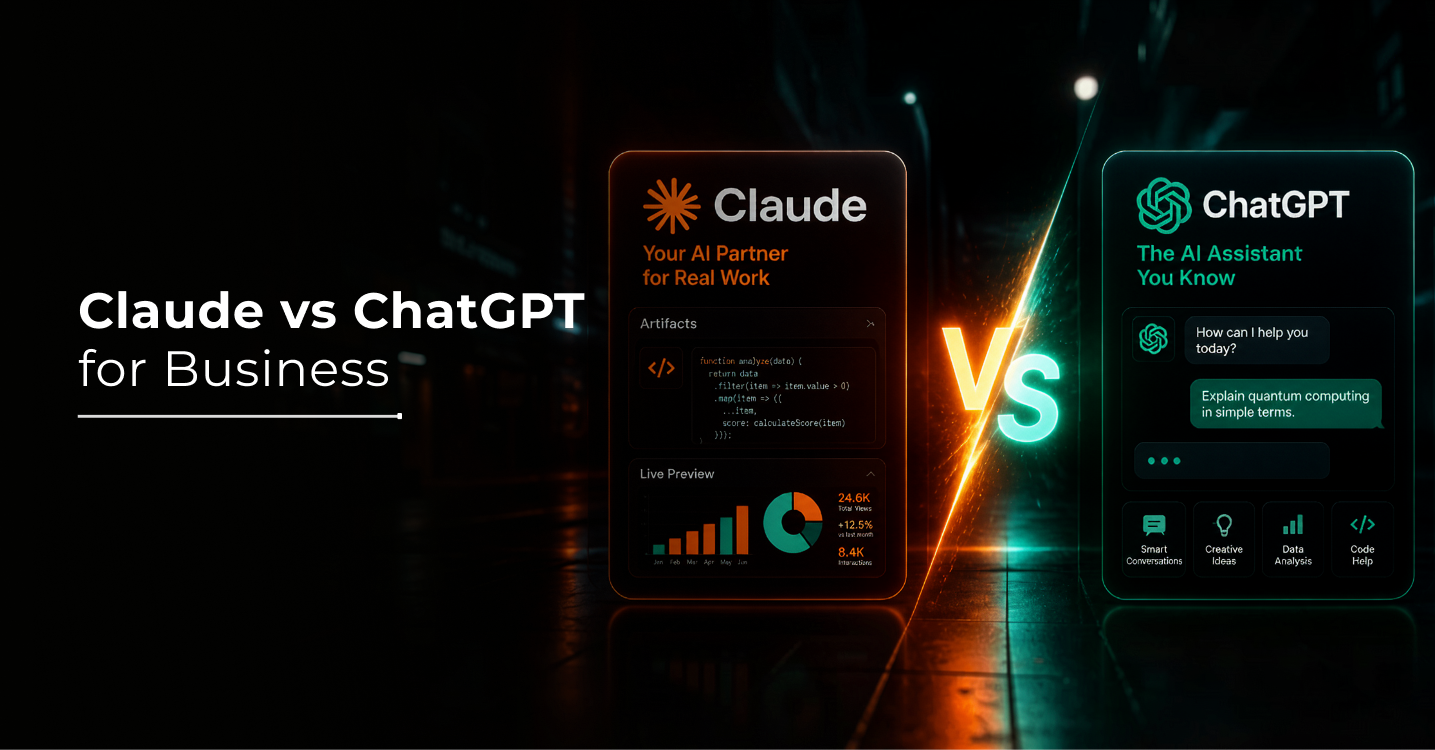
Artificial intelligence has moved beyond experimentation and become a practical business tool. Organisations across industries are using AI to support customer service, content creation, software development, internal operations, research, and decision-making. As adoption increases, businesses are paying closer attention to which platforms deliver the most value in real-world environments. Among the leading options available today, Claude and ChatGPT have emerged as two of the most widely discussed AI systems. Both platforms offer advanced conversational capabilities, support complex tasks, and continue to evolve rapidly through ongoing model improvements.
However, choosing between them is not always straightforward. While both tools belong to the same category of generative AI, they differ in areas such as reasoning style, workflow support, coding assistance, context handling, and business integration. The best choice often depends on how an organisation plans to use AI rather than which platform appears more advanced on paper. Understanding these differences is essential for businesses looking to invest in AI strategically rather than following trends.
Why Businesses Are Comparing Claude and ChatGPT
The discussion around Claude versus ChatGPT is growing because businesses are moving beyond basic AI usage. Early adoption focused primarily on content generation and simple conversational tasks. Today, organisations are exploring more advanced use cases such as:
- document analysis
- workflow automation
- customer support
- software development
- knowledge management
- employee training
- strategic research
As AI becomes integrated into operational processes, reliability and business relevance become more important than novelty. Companies want to know:
- Which platform handles large amounts of information more effectively?
- Which produces more accurate outputs?
- Which supports long-term business workflows?
- Which integrates more naturally into existing operations?
The answers vary depending on organisational requirements.
Understanding ChatGPT's Position in Business
ChatGPT has played a major role in bringing generative AI into mainstream business environments. Its widespread adoption has made it a familiar tool for professionals across marketing, operations, education, software development, and customer support.
Businesses often use ChatGPT for:
- content generation
- brainstorming
- email drafting
- meeting summaries
- research assistance
- coding support
- customer communication
One of ChatGPT's strengths is versatility. The platform supports a wide range of business activities without requiring extensive technical expertise. Users can move from writing content to analysing information and generating code within the same environment. This flexibility has contributed significantly to its popularity. For businesses that need a general-purpose AI assistant capable of supporting multiple departments, ChatGPT often provides an accessible starting point.
Understanding Claude's Position in Business
Claude has gained attention for a different set of strengths. Developed by Anthropic, Claude places significant emphasis on reasoning quality, contextual understanding, and handling large volumes of information.
Businesses often use Claude for:
- document analysis
- policy review
- contract summarisation
- research synthesis
- technical documentation
- long-form content development
- strategic information processing
One of Claude's most recognised advantages is its ability to work effectively with extensive context. Rather than analysing information in small segments, Claude can process larger bodies of content while maintaining continuity across outputs. This makes it particularly useful for organisations that work with detailed reports, technical documentation, and knowledge-intensive workflows. As discussed in What the New Claude AI Means for Businesses, Claude is increasingly being positioned as a tool capable of supporting more structured analytical work rather than functioning solely as a conversational assistant.
Comparing Reasoning and Analytical Performance
Reasoning quality has become one of the most important factors in business AI evaluation. Businesses are increasingly using AI systems for tasks that require more than simple text generation. They need tools capable of analysing information, identifying patterns, comparing alternatives, and maintaining logical consistency.
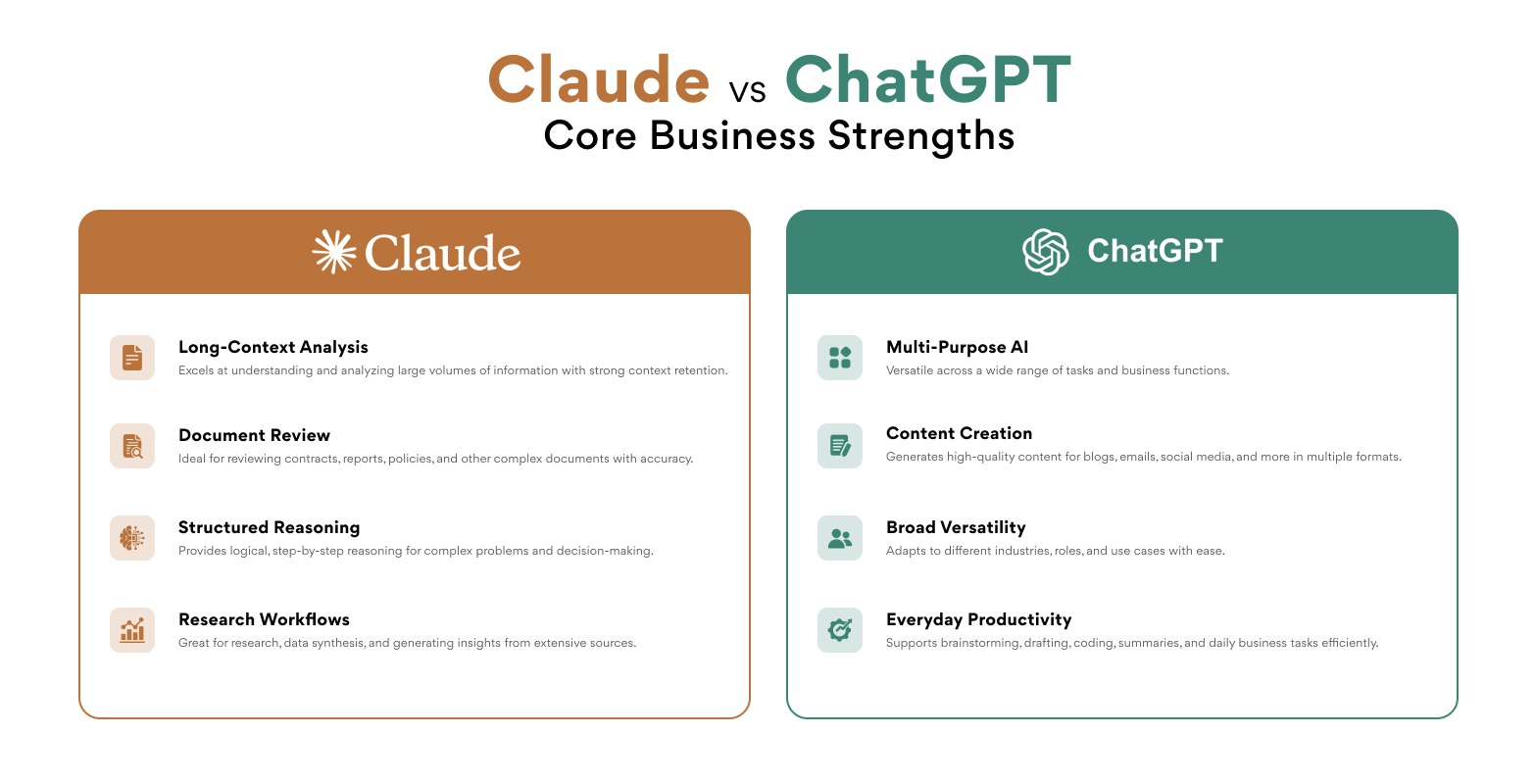
Claude generally performs strongly in situations involving:
- long-form analysis
- policy interpretation
- complex documentation
- structured reasoning
- detailed summarisation
Its responses often emphasise clarity, context, and step-by-step logic. ChatGPT also demonstrates strong reasoning capabilities, particularly in newer models. It performs effectively across a broad range of analytical tasks and often provides faster adaptability across different business scenarios. For organisations handling extensive documentation or knowledge-intensive work, Claude may provide advantages in contextual consistency. For businesses requiring broader flexibility across multiple functions, ChatGPT often remains highly competitive.
Document Handling and Context Capacity
Many business processes involve large amounts of information.
Examples include:
- operational reports
- legal contracts
- compliance documents
- research studies
- technical specifications
The ability to process extensive content efficiently can significantly influence productivity. Claude has developed a strong reputation in this area because of its long-context capabilities. Businesses can analyse larger documents without dividing information into multiple segments. This reduces fragmentation and improves continuity in outputs. ChatGPT has also expanded its context capabilities substantially, allowing businesses to work with increasingly large inputs. However, many organisations still view Claude as particularly strong when dealing with long-form documentation and structured analysis. For teams managing large knowledge repositories or extensive business documentation, context handling may become a deciding factor.
AI for Content Creation and Marketing
Content creation remains one of the most common business applications of AI.
Marketing teams use AI to support:
- blog writing
- content ideation
- social media planning
- campaign messaging
- SEO research
- email marketing
ChatGPT is widely used in these environments because of its flexibility and ability to generate content in multiple styles and formats. Claude also performs strongly in content generation, particularly for long-form writing that requires consistency and logical flow. Many businesses find that Claude produces highly structured content, while ChatGPT often provides greater stylistic variation. The choice frequently depends on workflow preferences rather than clear superiority. For content-heavy organisations, both tools can contribute significant productivity improvements.
Software Development and Technical Assistance
Software development has become another major area of AI adoption. Developers increasingly use AI for:
- code generation
- debugging
- documentation
- architecture explanations
- testing support
Both Claude and ChatGPT offer strong coding assistance capabilities. ChatGPT has built a large user base among developers because of its versatility and broad ecosystem. Claude has gained recognition for explaining code clearly and maintaining context across larger technical discussions. The best choice often depends on development workflows and team preferences rather than technical limitations alone.
Workflow Automation and Operational Efficiency
As businesses increasingly integrate AI into operational processes, workflow automation has become an important evaluation factor. AI is no longer limited to generating text or answering questions. Organisations are using AI to assist with:
- task management
- process documentation
- customer support workflows
- internal knowledge retrieval
- operational reporting
- decision support
Both Claude and ChatGPT can contribute to automation initiatives, but their strengths often appear in different contexts. ChatGPT benefits from a broad ecosystem and integration flexibility. Businesses frequently use it alongside automation platforms, productivity tools, and customer engagement systems. This makes it attractive for organisations looking to deploy AI across multiple operational functions.
Claude, on the other hand, is often valued for its ability to process complex information before it enters automated workflows. Businesses dealing with large documents, policy frameworks, and structured operational procedures may find Claude particularly effective at analysing information before workflow execution. As discussed in How Workflow Automation Reduces Operational Errors, AI becomes most valuable when it supports consistency rather than simply increasing speed. The effectiveness of either platform depends largely on how it fits within existing operational processes.
AI in Employee Training and Learning Environments
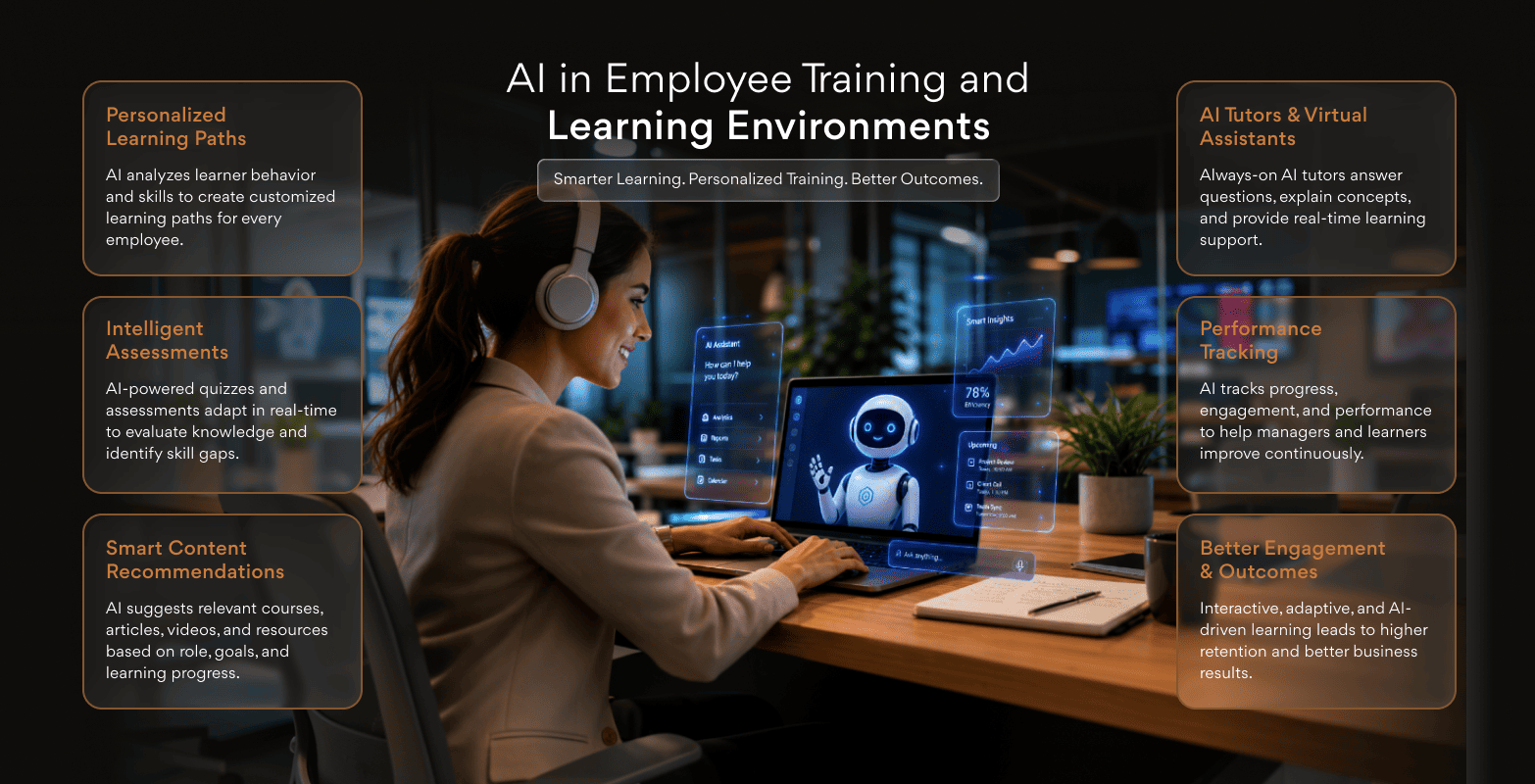
Learning and development teams are also exploring how AI can improve training delivery. Modern organisations need to:
- onboard employees efficiently
- deliver ongoing learning programs
- provide personalised support
- maintain training consistency
Both Claude and ChatGPT can support these objectives. ChatGPT is often used to create:
- training content
- learning materials
- onboarding documentation
- assessment questions
Claude performs strongly in situations requiring:
- policy interpretation
- detailed learning guides
- structured educational content
- long-form instructional material
This growing relationship between AI and training platforms is reshaping digital learning environments. Businesses investing in AI-powered training solutions may also benefit from understanding the role of AI in learning ecosystems, as explored in How AI Tutors Are Transforming Modern Learning Management Systems. Rather than replacing learning platforms, AI increasingly acts as a support layer that enhances learner engagement and content accessibility.
Integration and Ecosystem Considerations
Technology decisions rarely depend on functionality alone. Businesses must also consider how AI tools fit into existing systems.
Questions often include:
- Can the platform integrate with current workflows?
- Does it support operational scalability?
- Will employees adopt it easily?
- How does it fit into long-term technology strategy?
ChatGPT has developed a substantial ecosystem that supports a wide variety of integrations and business applications. This flexibility makes it attractive for organisations seeking broad deployment opportunities. Claude's growing enterprise adoption reflects a different strength. Many organisations value its analytical capabilities when handling information-heavy workflows and knowledge management processes.
The integration decision often depends less on model quality and more on operational fit. Businesses benefit most when AI complements existing systems rather than introducing additional complexity.
Cost, Adoption and Practical Business Considerations
Cost is another factor businesses evaluate when comparing AI platforms. However, direct subscription pricing is rarely the most important consideration.
The larger question is return on value. Businesses should evaluate:
- productivity improvements
- time savings
- workflow enhancement
- information accessibility
- operational efficiency
An AI platform that saves hours of manual work each week may generate value far beyond its subscription cost. Adoption is equally important. Even powerful AI systems deliver limited benefits if employees struggle to integrate them into daily workflows.
Successful AI adoption depends on:
- clear use cases
- employee training
- process alignment
- governance standards
The most effective platform is often the one employees use consistently.
Which Businesses May Benefit More from Claude?
Claude may be particularly valuable for organisations that:
- work extensively with long-form documentation
- analyse policies and procedures regularly
- manage large knowledge repositories
- require detailed summarisation
- prioritise structured reasoning
Examples include:
- consulting firms
- legal environments
- compliance teams
- research organisations
- knowledge-intensive enterprises
Its ability to maintain context across larger bodies of information can improve efficiency in documentation-heavy workflows. Businesses focused on analytical depth often find Claude especially useful.
Which Businesses May Benefit More from ChatGPT?
ChatGPT may be particularly suitable for organisations seeking a broad AI assistant capable of supporting multiple departments simultaneously.
Examples include:
- marketing teams
- customer support departments
- sales operations
- small and medium-sized businesses
- software development teams
Its flexibility allows businesses to apply AI across a wide range of everyday activities. For organisations beginning their AI journey, this versatility often makes adoption easier. ChatGPT performs well when businesses require a balance of content creation, operational support, communication assistance, and productivity enhancement.
Is There Really a Single Winner?
One of the most common misconceptions in AI discussions is the assumption that one platform must be universally better than the other. In reality, business requirements vary significantly. A legal team analysing lengthy contracts may prioritise different capabilities than a marketing department producing campaign content. Similarly, a software development company may evaluate AI differently from a training organisation or consulting firm.
The more useful question is not:
"Which AI platform is best?"
but rather:
"Which AI platform is best for our specific workflows?"
Businesses that approach AI adoption through this lens typically make stronger long-term technology decisions.
The Future of Business AI
The competition between Claude and ChatGPT reflects a broader trend within enterprise technology. AI systems are evolving from standalone tools into integrated operational resources.
Future developments will likely focus on:
- deeper workflow integration
- improved reasoning
- larger context handling
- enhanced automation capabilities
- enterprise governance support
As these capabilities mature, businesses will increasingly evaluate AI based on measurable operational outcomes rather than novelty. The organisations that benefit most will be those that align AI adoption with business objectives rather than pursuing technology for its own sake.
Conclusion
Both Claude and ChatGPT offer significant value for modern businesses, but they excel in slightly different areas. Claude stands out for its structured reasoning, long-context processing, and ability to handle information-intensive workflows. ChatGPT offers exceptional versatility, broad business applicability, and strong support across content creation, communication, development, and productivity tasks. The right choice depends on how AI will be used inside the organisation. Businesses focused on documentation, research, and analytical workflows may find Claude particularly effective, while organisations seeking a flexible AI assistant across multiple departments may benefit more from ChatGPT.
At IPIX Technologies, an experienced IT company in India, emerging technologies are evaluated through a practical business lens, helping organisations identify digital solutions that support productivity, innovation, and long-term operational growth.










































 Talk to our Expert