Sales Pipeline Management 101: How CRM Automation Closes More Deals
Posted on : 13 March, 2026
Sales success rarely happens by chance. Behind every successful deal is a structured process that guides potential customers from their first interaction with a company to the moment they decide to purchase. This process is commonly referred to as the sales pipeline. While many businesses invest heavily in marketing to generate leads, they often overlook the importance of managing those leads effectively once they enter the sales process. Without a clear pipeline structure, opportunities can easily be lost, follow-ups may be inconsistent, and sales forecasting becomes unreliable.
Customer Relationship Management (CRM) systems have significantly improved how organisations handle this challenge. By introducing automation, centralised data management, and clear visibility across the sales journey, CRM platforms help sales teams manage opportunities more efficiently and close deals with greater consistency. Understanding how pipeline management works and how CRM automation strengthens it is essential for businesses that want to improve their sales performance.
Understanding the Role of a Sales Pipeline
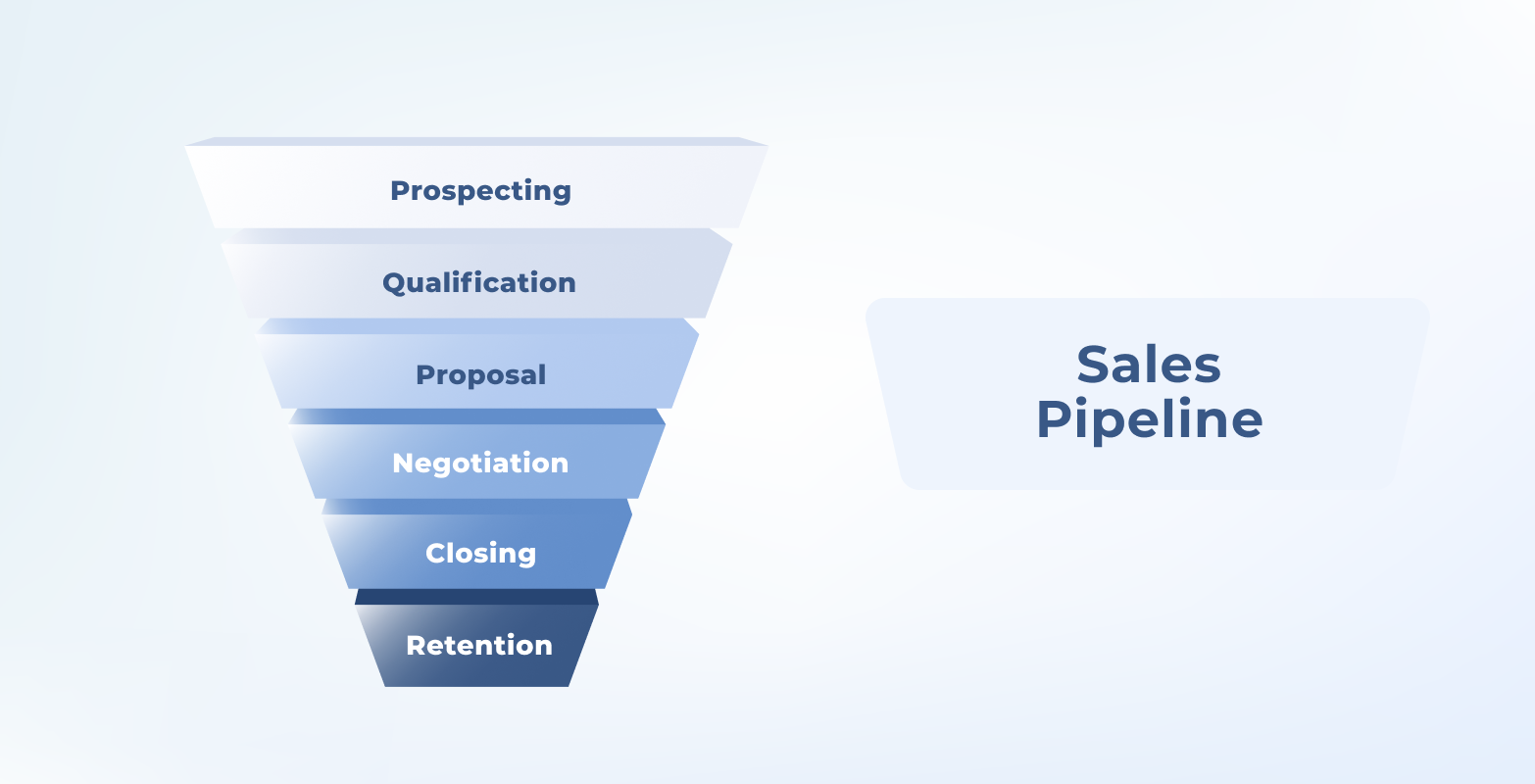
A sales pipeline represents the sequence of stages that a potential customer moves through before becoming a paying client. Rather than treating sales as isolated conversations, the pipeline approach recognises that most purchasing decisions happen gradually.
Typical pipeline stages include:
- Lead identification
- Qualification
- Needs assessment
- Product demonstration or proposal
- Negotiation
- Deal closure
Each stage represents a step in the decision-making process. As prospects move forward through these stages, their likelihood of converting into customers increases. A structured pipeline provides several advantages. Sales teams gain clarity about how many opportunities exist at each stage, managers can identify bottlenecks that slow down progress, and organisations can estimate future revenue more accurately. Without a pipeline framework, sales activity becomes fragmented. Conversations may happen independently, but there is no systematic way to track how opportunities evolve over time.
Why Traditional Sales Tracking Often Fails

Many organisations still rely on spreadsheets, email records, or individual notes to track sales activities. While these methods may appear manageable at first, they quickly become inefficient as the number of leads increases.
Manual tracking introduces several common problems.
Missed follow-ups
Sales representatives may forget to reconnect with prospects after initial conversations, causing opportunities to fade.
Lack of shared visibility
Managers and team members often cannot see the full picture of ongoing deals, making coordination difficult.
Unclear deal status
Without structured stages, it becomes difficult to determine whether a lead is still active or has already lost interest.
Inaccurate forecasting
When pipeline data is incomplete or scattered across multiple systems, predicting future revenue becomes largely speculative.
These issues do not necessarily indicate poor sales ability. More often, they reflect the absence of structured tools to manage complex sales processes.
The Importance of Pipeline Visibility
Pipeline visibility is one of the most valuable outcomes of structured sales management. When all deals are tracked within a single system, businesses gain a clear overview of their sales activity.
With proper visibility, organisations can answer questions such as:
- How many deals are currently in progress?
- Which opportunities are close to closing?
- Where are most leads dropping off in the pipeline?
- What level of revenue can be expected in the coming months?
Having this information available in real time allows managers to allocate resources more effectively and provide targeted support to sales teams. Visibility also encourages accountability. When each opportunity is tracked and updated regularly, it becomes easier to monitor progress and maintain momentum across the pipeline.
CRM platforms are designed to provide this level of transparency.
How CRM Systems Improve Pipeline Management

Customer Relationship Management systems bring structure to sales operations by consolidating customer data, interaction history, and deal progress within a single platform. Instead of relying on scattered communication channels or personal notes, CRM systems maintain a centralised database that records every interaction with a prospect.
Key improvements introduced by CRM systems include:
- Centralised lead tracking
- All customer interactions calls, emails, meetings, and notes are stored in one location.
- Clear deal stages
- Opportunities are organised according to pipeline stages, allowing teams to see how deals progress over time.
- Team collaboration
- Multiple team members can access the same information, ensuring continuity when responsibilities change.
- Activity tracking
- Every action related to a prospect is recorded, providing a detailed history that supports informed decision-making.
By organising sales data systematically, CRM systems transform the pipeline from a conceptual framework into a measurable operational process.
The Role of CRM Automation in Modern Sales
While centralised tracking improves visibility, automation is what truly enhances pipeline efficiency. CRM automation reduces the administrative workload associated with sales management. Instead of manually recording every activity or scheduling each follow-up, automated workflows ensure that essential actions occur consistently.
Automation can support tasks such as:
- Scheduling follow-up reminders
- Sending automated emails after initial contact
- Assigning new leads to the appropriate sales representative
- Updating deal stages based on customer interactions
- Notifying teams when prospects engage with content
These automated processes ensure that opportunities move through the pipeline without unnecessary delays. More importantly, automation allows sales professionals to spend less time managing data and more time building relationships with potential clients.
Maintaining Consistent Follow-Ups
One of the most common reasons sales opportunities fail to convert is inconsistent follow-up. Prospects may show genuine interest during an initial interaction but lose momentum if communication stops or becomes irregular. Sales representatives often manage multiple prospects at the same time. Without structured reminders, it becomes easy to overlook certain leads or delay important responses.
CRM automation addresses this challenge by ensuring that follow-up actions are scheduled and tracked automatically. For example, after a prospect submits a contact form or downloads product information, the CRM system can trigger a sequence of automated responses. These may include introductory emails, reminders for sales representatives, or notifications that prompt the next stage of engagement. Automation ensures that every lead receives timely communication. Even when sales teams are managing large numbers of prospects, the system maintains continuity in the conversation. This consistent engagement increases the likelihood that prospects remain interested and continue progressing through the pipeline.
Improving Sales Team Productivity
Another important benefit of CRM automation is improved productivity. Sales teams often spend significant time on administrative tasks such as entering data, updating spreadsheets, or tracking email exchanges. While these activities are necessary, they do not directly contribute to closing deals. Automation reduces the time required for these repetitive processes. CRM systems can automatically record communication history, track customer interactions, and update deal status when certain actions occur.
This allows sales representatives to focus on higher-value activities such as:
- understanding customer requirements
- presenting tailored solutions
- conducting product demonstrations
- negotiating agreements
By reducing manual workload, CRM automation allows teams to dedicate more attention to building meaningful relationships with prospects. This shift in focus often leads to improved conversion rates and stronger long-term customer connections.
Data-Driven Decision Making in Sales
One of the most powerful features of CRM systems is the ability to generate data insights. When every interaction and deal stage is recorded systematically, organisations gain access to valuable information about their sales performance.
CRM analytics allow managers to track metrics such as:
- conversion rates between pipeline stages
- average deal size
- sales cycle length
- individual sales performance
- pipeline growth trends
These insights help businesses identify patterns that may otherwise go unnoticed. For example, if many deals consistently stall at a particular stage, it may indicate that additional resources or improved communication strategies are required. Data-driven decision making enables organisations to refine their sales strategies over time. Instead of relying on intuition, managers can base adjustments on measurable outcomes.
A Practical Example of an Automated Sales Pipeline
To understand how CRM automation works in practice, it is useful to examine a simple example of a structured pipeline.
- Lead capture – A prospect interacts with marketing content or fills out a contact form. The CRM automatically records the lead and assigns it to a sales representative.
- Qualification – The sales team evaluates whether the prospect matches the organisation’s target customer profile.
- Initial conversation – A discovery meeting or call is conducted to understand the prospect’s needs.
- Proposal stage – The organisation presents a tailored solution or quotation based on the prospect’s requirements.
- Negotiation – Final details such as pricing, timelines, or contract terms are discussed.
- Deal closure – The agreement is finalised and the prospect becomes a customer.
At each stage, the CRM system can trigger automated reminders, update deal status, and record communication history. This ensures that every opportunity progresses through the pipeline in a structured and traceable way.
CRM Automation and Revenue Forecasting
Another major advantage of structured pipeline management is improved revenue forecasting. When opportunities are tracked consistently, businesses can estimate future income with greater accuracy. CRM systems allow organisations to evaluate the probability of closing deals based on their stage in the pipeline. Deals that have reached advanced stages such as negotiation are more likely to convert than early-stage leads.
By analysing the number and value of opportunities at each stage, companies can create realistic projections of upcoming revenue. This information helps leadership teams plan budgets, allocate resources, and make strategic decisions with greater confidence. Accurate forecasting also helps organisations detect potential gaps in the pipeline. If future revenue projections appear lower than expected, additional lead generation or marketing efforts can be introduced in time to address the issue.
The Strategic Importance of Sales Pipeline Management
Sales pipelines should not be viewed merely as operational tools. They represent the framework through which organisations transform potential interest into measurable revenue. Without structured pipeline management, even businesses with strong products or services may experience inconsistent sales performance. Opportunities become scattered across communication channels, follow-ups become irregular, and managers lack visibility into how deals are progressing.
CRM automation provides the structure necessary to address these challenges. By centralising customer data, organising deal stages, and automating routine tasks, CRM systems allow businesses to manage their sales processes more effectively. Over time, this structureds approach leads to greater predictability, stronger team coordination, and improved sales outcomes.
Conclusion
Sales pipeline management plays a critical role in converting leads into successful deals. When opportunities are tracked systematically and supported by automation, sales teams gain the clarity and efficiency needed to maintain consistent engagement with prospects. CRM automation strengthens this process by reducing administrative effort, improving visibility across the pipeline, and ensuring that follow-ups occur at the right moment. As a result, businesses can focus their energy on meaningful conversations and strategic decision-making rather than manual data management.
At IPIX, organisations gain access to CRM solutions designed to support structured sales processes and long-term business growth. As an experienced IT company in India, IPIX helps businesses implement technology systems that streamline operations, strengthen customer relationships, and create more reliable pathways from lead generation to deal closure.














































 Talk to our Expert