Common Web Development Mistakes That Cost Businesses Leads

Posted on : 28 January, 2026
Websites are often evaluated based on how they look or how much traffic they attract. However, the real measure of a business website is how effectively it converts visitors into enquiries, sign-ups, or customers. When leads are low, the problem is frequently assumed to be marketing-related. In reality, many lead-generation issues originate from web development decisions.
These issues are not always visible on the surface. Pages may load, designs may appear modern, and content may be present. Yet, small technical and structural mistakes quietly reduce the chances of visitors taking action.
Lead loss rarely happens because of one large failure. It usually happens because of many small development choices that, over time, make a website harder to use, slower to trust, and more difficult to navigate.
Key Web Development Mistakes That Affect Lead Generation
Mistake 1: Treating Design as the Main Objective
Design plays an important role in perception, but when design becomes the primary focus, functionality often suffers. Design-first websites commonly face problems such as unclear content hierarchy, distracting visual elements, low contrast or readability issues, and confusing layouts.
When users arrive on a website, they scan before they read. If the structure does not clearly show what matters, users miss important information. Large visuals, animations, or complex layouts can hide key messages instead of highlighting them.
Design should support understanding, not compete with it. When development is driven mainly by visual ideas, practical questions often get ignored. How fast does this load? Can this be used easily on all devices? Does this layout guide action?
Visitors do not come to admire design alone. They come to understand what a business offers and decide whether to take the next step. When design interferes with clarity, users hesitate, and hesitation reduces conversions.
Good web development ensures that design supports usability rather than competing with it.
Mistake 2: Ignoring Website Performance
Speed directly influences user behaviour. Even small delays can reduce engagement and increase abandonment.
Performance issues usually come from:
- heavy scripts and animations
- unoptimised images and media
- poor caching strategies
- inefficient code structure
Performance problems often begin at the development stage, not after launch. Choices about frameworks, libraries, and hosting environments directly affect how fast a website can become.
Many websites try to fix speed later using plugins or patches. While this can help slightly, it rarely solves deeper structural problems created by poor development decisions.
When pages load slowly, visitors leave before reading content or filling forms. Search engines also reduce visibility for slow websites, further limiting lead potential.
Performance is not something to “fix later.” It must be built into development from the start.
Mistake 3: Poor Mobile Experience
Most website visits now happen on mobile devices, yet many sites still offer weak mobile usability.
Common mobile issues include:
- buttons too small or too close together
- text that requires zooming
- slow loading on mobile networks
- layouts that break on smaller screens
Many websites look responsive but are not truly usable on mobile. Elements may resize, but interaction still feels difficult. Forms become frustrating, navigation becomes unclear, and content becomes tiring to read.
Mobile users are often in motion or multitasking. They need simple layouts, fast loading, and easy interaction. Development that does not consider real mobile behaviour creates barriers without realising it.
If users struggle to interact with a website on mobile, they simply leave. Responsive design alone is not enough; mobile experience must be tested, refined, and optimised at the development level.
Mistake 4: Unclear User Pathways
A website should guide visitors naturally from entry to action. When structure is weak, users feel lost.
This often happens due to:
- cluttered navigation
- too many competing options
- inconsistent page layouts
- missing or weak calls to action
Users do not read websites in a straight line. They jump between sections, scan headings, and follow visual cues. Development must support this behaviour through logical page structure and clear navigation systems.
When multiple choices appear at once, users delay decisions. When pages look different from each other, users lose orientation. When calls to action are hidden, users stop before converting.
Visitors should never wonder what to do next. Development plays a key role in shaping user flow through navigation, page hierarchy, and interaction design.
When pathways are unclear, even interested users fail to convert.
Mistake 5: Weak Form and CTA Development
Forms and calls to action are central to lead generation, yet they are often treated as minor elements.
Form-related development issues include:
- slow processing
- unclear error messages
- poor validation logic
- unreliable submission handling
Every form represents a moment of trust. Users are giving personal or business information. If anything feels broken, delayed, or confusing, they stop.
Forms also fail when they ask too much. Too many required fields, unclear instructions, or confusing layouts make users abandon the process.
Good development ensures that forms are fast, simple, reliable, and clearly connected to user intent. Even small improvements in form behaviour can significantly increase lead numbers.
Mistake 6: Over-Reliance on Templates
Templates offer speed, but they introduce limitations.
Template-based websites often:
- restrict layout flexibility
- limit performance optimisation
- include unnecessary features
- make future changes difficult
Templates are designed to serve many businesses, not one specific business. As a result, they include functions that are never used and lack features that become necessary later.
As a business grows, its website needs to evolve. New content, new services, and new integrations require flexibility.
Many organisations eventually turn to a custom web development company in India to rebuild sites that no longer support their needs.
Short-term convenience often creates long-term constraints.
Mistake 7: Ignoring Technical SEO Foundations
SEO is not only about keywords and content. Development structure strongly influences how search engines understand a website.
Technical issues that affect visibility include:
- poor URL structures
- missing semantic markup
- heavy scripts blocking rendering
- weak internal linking systems
Search engines interpret structure before content. If structure is unclear, content becomes harder to rank.
When technical SEO is ignored during development, visibility suffers, reducing the number of potential leads reaching the site. Fixing these issues later often requires large structural changes.
Strong development foundations make SEO easier, not harder.
Mistake 8: No Analytics or Event Tracking Setup
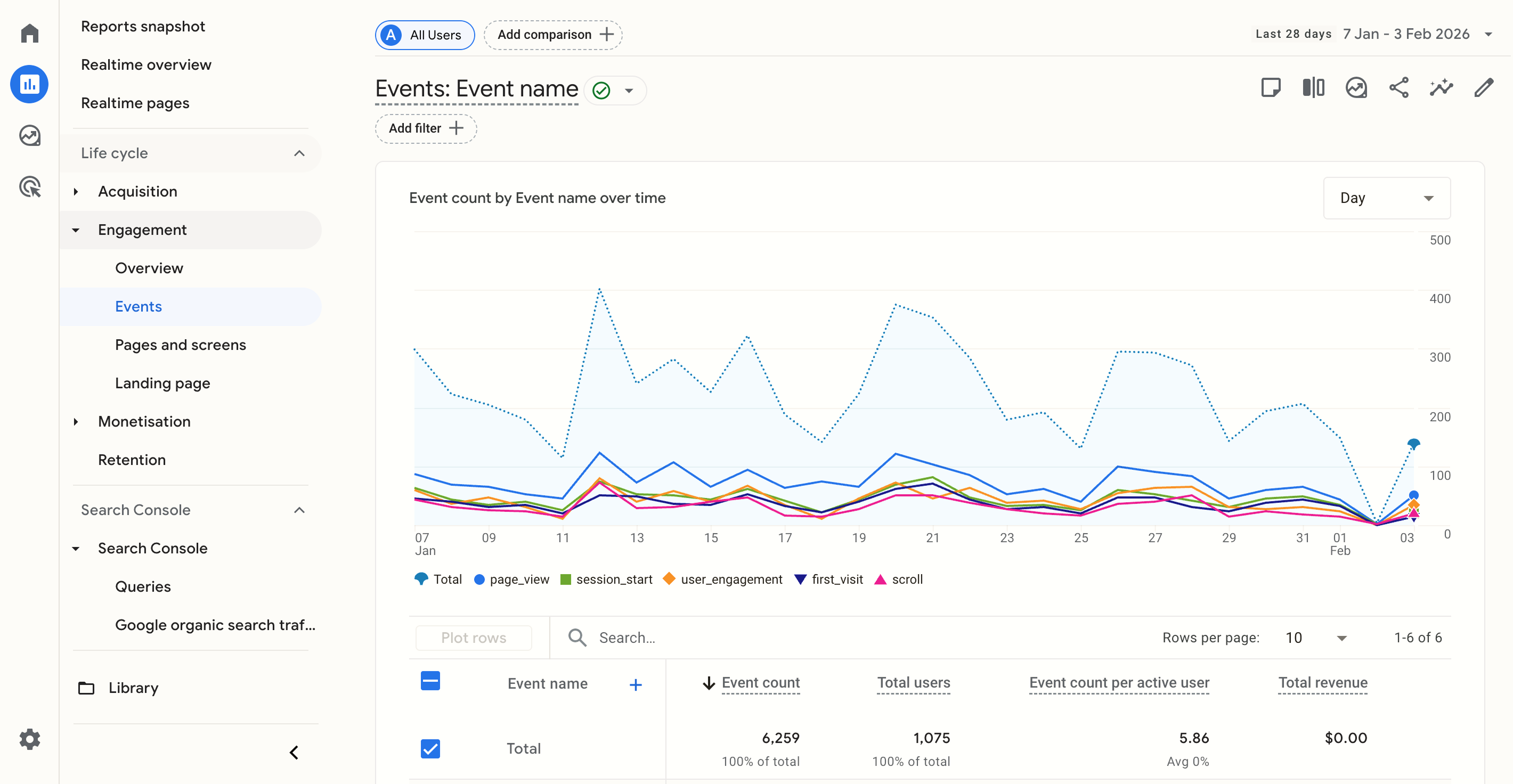
Without data, optimisation becomes guesswork.
Many websites lack proper:
- event tracking
- conversion tracking
- form interaction monitoring
- drop-off analysis
When tracking is missing, teams do not know which pages work and which ones fail. They do not know why users leave or where they hesitate.
Development is responsible for implementing tracking systems correctly. Without this, businesses cannot understand where leads are lost or how to improve.
Decisions based on assumptions always perform worse than decisions based on data.
Mistake 9: Neglecting Security and Stability
Unstable or insecure websites lose trust quickly.
Development shortcuts can lead to:
- frequent downtime
- security vulnerabilities
- broken integrations
- data loss risks
Even small technical issues reduce confidence. Visitors hesitate to submit forms on websites that appear unreliable or unsafe.
Security and stability are not optional features. They are basic requirements for any website that expects users to trust it.
Long-term development planning prevents many of these issues before they appear.
Mistake 10: No Plan for Scalability
Websites built only for present needs often fail as businesses grow.
Early decisions can limit:
- content expansion
- feature additions
- performance under higher traffic
- integration with new systems
Scalability is not about size. It is about flexibility.
A website should be able to grow without being rebuilt. Without scalability, websites become barriers instead of support systems.
What These Mistakes Have in Common
These mistakes share three traits. They originate from development decisions. They affect user behaviour silently. And they reduce conversions gradually.
Most businesses do not notice these problems until lead numbers decline significantly. By then, fixing them takes more time and cost than preventing them early.
What Good Web Development Does Differently
Effective web development focuses on clarity over decoration, performance over complexity, usability over novelty, structure over shortcuts, and scalability over speed of launch.
It treats a website as a long-term system, not a one-time project.
Conclusion
Leads are not lost only because of weak marketing. They are often lost because development choices make it difficult for users to act.
Websites fail to convert when they are slow, confusing, unstable, or difficult to use. These are not content problems. They are development problems.
At IPIX, web development is approached as a structured, strategic discipline. Each project is built with performance, usability, and long-term growth in mind, ensuring websites remain functional as business needs evolve.
For organisations looking to work with a web development company in India that treats websites as long-term systems rather than short-term projects, choosing a team with strong technical foundations and strategic thinking is essential.















































 Talk to our Expert