The Difference Between an LMS and Training Management System

Posted on : 14 April, 2026
Businesses investing in training technology often encounter two terms that appear similar but serve different purposes: Learning Management System (LMS) and Training Management System (TMS). Because both are associated with learning, many organisations assume they refer to the same type of platform.
In practice, they solve different operational problems.
A Learning Management System is primarily designed to deliver, manage, and track learning content. It supports digital learning environments where users access training modules, complete assessments, and progress through structured learning paths.
A Training Management System focuses more on the administration of training operations. It is designed to manage logistics such as scheduling sessions, allocating instructors, tracking attendance, and coordinating training resources.
The distinction matters because choosing the wrong system can create unnecessary complexity. Businesses that need digital learning delivery may not benefit from a platform built mainly for scheduling, while organisations managing instructor-led training may require more than standard learning delivery tools. Understanding the difference helps businesses choose systems that align with how training actually happens inside the organisation.
What a Learning Management System Is Designed to Do

A Learning Management System is built around learning delivery. Its primary role is to provide a digital environment where learners can access educational content and complete structured training programs.
Typical LMS functions include:
- course delivery
- learner registration
- assessments
- certification tracking
- progress reporting
- learning path creation
The platform acts as a central learning space where users interact directly with content. In most cases, an LMS allows organisations to upload training materials in different formats such as:
- videos
- documents
- presentations
- quizzes
- interactive modules
Learners can complete modules at their own pace, revisit materials when needed, and track their own progress. This makes LMS platforms particularly effective when businesses need scalable digital learning environments across multiple teams or locations.
Why LMS Platforms Became Essential in Digital Learning
The increasing demand for flexible learning has made LMS platforms central to modern training strategies. Businesses no longer rely solely on physical training sessions. Employees often work across locations, remote teams require asynchronous access to content, and organisations need consistent learning experiences regardless of geography. An LMS solves this by making content available through a single digital platform.
This creates several advantages:
- training can happen anytime
- learners progress independently
- content remains consistent
- reporting becomes measurable
This is one reason why many businesses evaluating the Best LMS Software in India prioritise systems that support scalability and easy content management. The LMS becomes more than a training tool. It becomes part of operational knowledge delivery.
Where LMS Performs Best
A Learning Management System performs especially well when training needs are continuous rather than event-based.
Examples include:
- employee onboarding
- compliance learning
- product knowledge training
- recurring skill development
- customer education
Because content remains available inside the platform, organisations do not need to repeat instructor-led sessions each time new learners join. This improves efficiency over time. It also explains why LMS in education and corporate learning environments often share similar digital structures. Both require repeatable access to content, learner tracking, and measurable outcomes. The strongest advantage of an LMS is that learning delivery becomes independent of physical scheduling.
What a Training Management System Is Designed to Handle
A Training Management System serves a different operational purpose. Rather than focusing primarily on content delivery, a TMS manages the logistics surrounding training activities.
Typical TMS functions include:
- scheduling training sessions
- assigning instructors
- managing venues
- handling registrations
- tracking attendance
- coordinating resources
A TMS is especially useful when organisations conduct frequent instructor-led sessions or manage large training calendars. For example, if a company runs classroom-based technical workshops across multiple locations, the complexity is less about content hosting and more about coordinating sessions effectively. The TMS handles these administrative layers. This means the platform focuses less on learner interaction with digital content and more on managing the operational structure around training delivery.
Why Businesses Often Confuse LMS and TMS
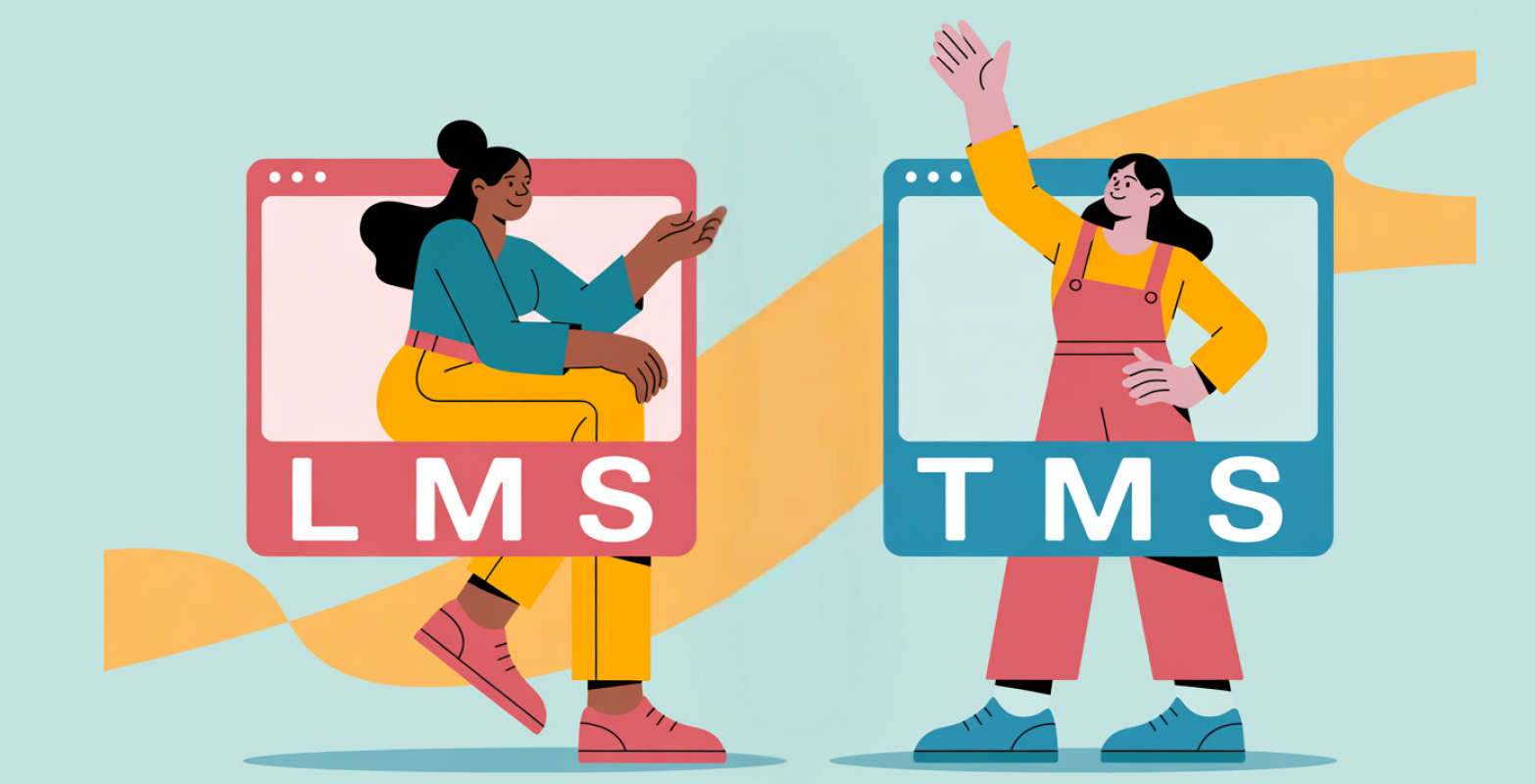
The confusion usually happens because both systems are associated with training outcomes. A business may assume that if both platforms support learning, they must function in similar ways. However, the practical distinction becomes clear when looking at user interaction.
In an LMS:
- learners spend time inside the platform
- content consumption is central
- assessments happen within the system
In a TMS:
- administrators and coordinators use the platform more actively
- scheduling and logistics dominate
- learning may happen outside the platform itself
The learner experience is therefore very different. This difference becomes important during software selection because businesses often buy platforms based on labels rather than actual operational needs.
Core Functional Difference
The simplest distinction can be understood this way:
LMS = learning delivery
TMS = training administration
An LMS manages what learners consume.
A TMS manages how training events are organised.
This distinction affects:
- implementation priorities
- reporting requirements
- user roles
- integration needs
Businesses focused on digital learning content usually benefit first from LMS adoption. Businesses managing complex training logistics may need TMS capabilities more urgently.
Where a Training Management System Works Better
A Training Management System becomes particularly valuable when training depends heavily on scheduling and coordination rather than self-paced digital learning.
Many organisations still run:
- instructor-led workshops
- classroom sessions
- scheduled certification programs
- recurring internal seminars
- location-based skill training
In these situations, managing logistics often becomes more complex than managing content itself. For example, a company conducting monthly technical workshops across several branches must coordinate:
- trainer availability
- venue booking
- participant registration
- attendance tracking
- communication reminders
A standard LMS may deliver learning materials effectively, but it does not always provide the operational control needed for these logistical requirements. A TMS is designed for this type of environment because administrative coordination becomes the central challenge.
Why LMS and TMS Are Increasingly Used Together
As training models evolve, many businesses no longer operate purely in digital or purely classroom-based formats. Instead, they use blended learning structures that combine digital content with scheduled instruction.
This is where LMS and TMS often complement each other.
For example:
- learners complete digital modules inside an LMS
- instructor-led workshops are scheduled through a TMS
- attendance is tracked separately
- certification records may be linked across systems
This hybrid approach is increasingly common in organisations that need both flexibility and operational control. A digital module may provide foundational knowledge before a classroom workshop. The LMS delivers content, while the TMS ensures that the live session is organised efficiently. Rather than choosing one system as a replacement for the other, some businesses use both because each platform supports a different part of the learning process.
Choosing Based on Training Objectives
The right system depends less on terminology and more on how training is delivered inside the organisation.
A business that mainly requires:
- onboarding content
- recurring compliance modules
- remote learning access
- self-paced development
usually benefits more from an LMS.
A business that mainly requires:
- event scheduling
- instructor coordination
- attendance management
- multi-location training logistics
may require TMS functionality first. The key is understanding which operational problem needs to be solved. Many software decisions fail because organisations start by comparing features instead of examining how learning actually happens internally. Technology should reflect process, not define it.
Reporting Differences Between LMS and TMS
Another major distinction appears in reporting. An LMS focuses on learner performance.
Typical LMS reporting includes:
- course completion rates
- assessment scores
- learner progress
- certification status
- time spent on modules
These reports help organisations understand whether learners are engaging with content and completing learning objectives. A TMS focuses more on operational reporting.
Typical TMS reporting includes:
- attendance records
- trainer schedules
- session capacity
- resource allocation
- training calendar performance
These reports help administrators evaluate whether training operations are functioning efficiently. Both types of reporting are useful, but they answer different management questions.
Integration Needs Also Differ
System integration requirements also vary depending on whether a business adopts an LMS or a TMS.
A Learning Management System often integrates with:
- HR systems
- employee databases
- content libraries
- assessment tools
- communication platforms
This supports learner tracking and structured content delivery.
A Training Management System often integrates with:
- calendar tools
- booking systems
- trainer databases
- attendance tools
- venue scheduling systems
Because the operational focus differs, integration priorities differ as well. Businesses evaluating systems often overlook this and focus only on visible features rather than long-term system compatibility.
Why Businesses Usually Start with an LMS
For many organisations, an LMS becomes the first training technology investment because learning delivery increasingly happens digitally. Remote work, distributed teams, and ongoing skill development have increased the need for structured digital learning environments.
An LMS allows businesses to:
- create repeatable training programs
- reduce repeated instructor effort
- maintain learning consistency
- measure engagement over time
This explains why companies exploring the Best LMS Software in India often begin by evaluating learning delivery platforms before considering broader training administration systems. In many cases, digital learning needs emerge earlier than scheduling complexity. As organisations grow further, TMS requirements may follow.
The Long-Term Decision Framework
Choosing between an LMS and a TMS should begin with three practical questions:
- Where does most training happen today?
- Is content delivery or scheduling the bigger challenge?
- Will training scale across locations or teams soon?
If learning content must reach many people repeatedly, an LMS usually creates stronger immediate value. If operational coordination already consumes significant administrative effort, TMS capability becomes more important. In many modern organisations, the answer eventually becomes a blended approach. The goal is not to adopt technology for completeness. The goal is to support how learning actually operates.
Conclusion
Although a Learning Management System and a Training Management System both support training, they serve different operational purposes. An LMS focuses on delivering structured learning content, while a TMS focuses on managing the logistics surrounding training delivery. Understanding this distinction helps businesses avoid unnecessary complexity during software selection. The right system depends on whether the primary need is learner engagement, training administration, or a combination of both.








































 Talk to our Expert