Why Traditional Employee Training Is Costing You More Than You Think

Posted on : 27 December, 2025
Most organizations don’t question employee training. It’s treated as a given, something that automatically comes with growth. New people join, so onboarding happens. A new tool is introduced, so a training session is arranged. Performance dips, so another workshop is planned. It all feels logical. Necessary. Responsible.
But if you’ve spent enough time inside real teams especially growing ones you start to notice something uncomfortable. Training keeps happening, yet the same problems keep resurfacing. People still make the same mistakes. Productivity improves slowly. Managers spend more time explaining than moving forward.
That’s usually the first sign that training exists, but learning isn’t really happening.
Most companies still rely on fragmented training methods, without a central Learning Management System to support learning beyond a one-time session. And that’s where the real cost begins to show not loudly, but consistently.
The Costs You Approve Are Not the Costs That Hurt You
Ask any manager what training costs and the answer is usually neat and measurable. Trainer fees. Travel expenses. Venues. Printed materials. A few days blocked on the calendar.
Those costs are visible. They’re approved in advance and forgotten once the session is over.
What doesn’t get discussed is what happens around that training.
Work piles up before training days. Deadlines quietly shift. After training, employees return to overloaded inboxes and unfinished tasks. Whatever they learned now competes with real work pressures.
And there’s another uncomfortable truth: most traditional training delivers far more information than people can realistically absorb in one sitting. Employees listen, take notes, and tell themselves they’ll apply it later.
Later rarely comes.
Within days, most details fade. What remains is a vague understanding and a document no one revisits. The company paid for time, but didn’t really buy improvement.
Productivity Loss Is the Quiet Drain Nobody Tracks

A full-day training session looks productive on a calendar. In reality, it disrupts momentum more than it builds capability.
Employees are removed from their normal workflow. Context is lost. Focus breaks. It often takes days to return to the same level of productivity they had before training.
That means the organization pays twice:
- once for the training itself
- again for the slowdown that follows
This is rarely measured, but it’s one of the biggest hidden costs of traditional training. An eight-hour training day almost never translates into eight hours of better work.
Engagement Is Often Mistaken for Success
From the outside, traditional training looks fine. People attend. Sessions run as planned. Feedback forms come back with polite responses.
But attendance isn’t engagement.
In most training rooms, you’ll find:
- employees who already know the content and switch off
- employees who are struggling but don’t speak up
- a small group who are genuinely engaged
The rest are simply present.
When learning feels generic, people disconnect quietly. They don’t complain. They don’t resist. They just stop caring. And disengaged learning doesn’t change behavior, no matter how experienced the trainer is.
Forgetting Is Predictable, Not a Performance Issue
One of the biggest myths in traditional training is the assumption that learning sticks just because it was delivered.
It doesn’t.
People forget because that’s how memory works. Without reinforcement, practice, or easy access to information when it’s needed, knowledge fades quickly.
Without a way to revisit learning whether through an LMS or even a structured internal system employees fall back into old habits faster than anyone expects.
When mistakes resurface weeks later, the response is usually more training. Another session. Another refresher. Another explanation.
This creates a loop:
train → forget → retrain → forget again
Each cycle costs time, energy, and confidence.
One-Size-Fits-All Training Slowly Wastes Talent
Traditional training treats everyone the same. Same content. Same pace. Same expectations.
Real teams don’t work that way.
Within any organization, you’ll find:
- fast learners who get bored
- new hires who need more support
- people who learn visually
- people who need hands-on practice
When training doesn’t adapt, nobody benefits fully. High performers feel held back. Others feel overwhelmed. The organization pays for training but sees little improvement in capability.
This isn’t a people problem. It’s a structural one.
Growth Exposes What Training Was Hiding
When teams are small, informal training works. People sit together. Questions are answered quickly. Knowledge spreads naturally.
Growth changes everything.
As headcount increases:
- training sessions must be repeated
- explanations vary by manager
- information lives in emails, slides, and conversations
- consistency disappears
This is usually when growing companies start looking for a Learning Management System, not because it’s fashionable, but because repeating the same training manually stops scaling.
Two people in the same role end up with different understandings. Teams operate slightly out of sync. Leadership senses performance gaps but struggles to identify the cause.
The Lack of Visibility Makes Every Decision Harder
One of the most damaging aspects of traditional training is how little it reveals.
After a session, most organizations can’t answer:
- who truly understood the material
- who is struggling quietly
- which topics caused confusion
- who is ready to take on more responsibility
Without visibility, decisions rely on assumptions. Managers guess. HR relies on anecdotal feedback. Performance reviews become subjective.
When learning isn’t visible, improving it becomes guesswork and guesswork is expensive.
Onboarding Is Where the Cost Becomes Impossible to Ignore
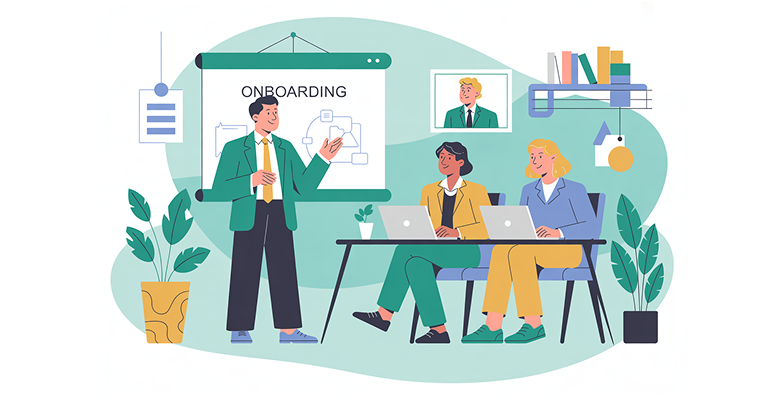
Onboarding highlights all the weaknesses of traditional training.
New hires are expected to absorb large amounts of information quickly. Processes, tools, expectations, and culture are introduced all at once.
Most learning happens through shadowing and trial and error.
Senior employees step in to help, pulling them away from their own work. New hires take longer to feel confident. Mistakes happen early. Productivity ramps up slowly.
Every extra week it takes for a new employee to become fully productive has a real cost. Multiply that across multiple hires, and the impact is significant.
This Problem Isn’t Limited to Businesses
You see the same pattern in LMS in education, where one-time instruction without reinforcement leads to similar gaps. Students attend sessions, complete courses, and still struggle to apply knowledge later.
The issue isn’t effort. It’s structure.
Traditional Training Was Built for a Different World
Work today is fragmented. People switch tasks constantly. Learning happens in short moments, not long uninterrupted sessions.
Traditional training still assumes people can pause work completely, absorb information in bulk, and apply it later under pressure.
That mismatch is why training feels disconnected from real work. Employees don’t resist learning they resist learning that doesn’t fit how they actually work.
Why Managers End Up Becoming Trainers (And Why That’s Costly)
Another hidden cost of traditional employee training shows up in places most organizations don’t expect managers.
When formal training fails to cover real-world scenarios, the responsibility quietly shifts to team leads. Managers become the default trainers, answering questions, correcting mistakes, and re-explaining processes that were already “covered” in training.
At first, this feels manageable. Helping team members is part of leadership, after all.
But over time, it creates friction.
Managers spend less time planning, reviewing, and improving work because they’re constantly filling knowledge gaps. Their days get fragmented with interruptions that shouldn’t exist. The same explanations are repeated across weeks and months.
This doesn’t just affect productivity it affects leadership quality.
When managers are stuck reinforcing basic knowledge:
- strategic thinking gets pushed aside
- coaching turns into firefighting
- decision-making slows down
- burnout increases quietly
What’s worse is that this cost rarely shows up in reports. It appears as “busy schedules” and “manager workload,” not as a training problem even though that’s exactly what it is.
Over time, organizations pay for this twice:
- once in inefficient training, and again in underutilized leadership
Why Training Feels Like Work Instead of Support
Ask employees how they feel about training, and the answer is rarely negative but it’s rarely enthusiastic either.
Training is often seen as something that:
- interrupts work
- adds pressure
- competes with deadlines
- feels disconnected from real tasks
This perception isn’t because employees dislike learning. It’s because traditional training often feels like extra work, not support.
When learning happens separately from daily responsibilities, people struggle to connect it to what they actually do. They understand the theory but hesitate when applying it.
Confidence builds slowly, even after multiple sessions.
That gap between “knowing” and “doing” is another silent cost. Work takes longer. Mistakes happen. People double-check things they should already be confident about.
Good training should remove friction. When it doesn’t, it adds to it.
The Real Cost Isn’t the Training Budget
Traditional training isn’t useless. It’s just incomplete.
The real cost isn’t what you spend on trainers or workshops. It’s what you lose through:
- slow productivity
- disengaged employees
- forgotten knowledge
- repeated mistakes
- inconsistent performance
- delayed growth
That’s why conversations around the Best LMS Software in India are no longer about features. They’re about whether learning actually sticks and scales.
Conclusion
If your training programs feel expensive but still leave gaps in performance, consistency, or confidence, the issue may not be effort it’s how learning is structured.
IPIX LMS is built for organizations that want training to move beyond one-time sessions and become part of everyday work. It helps centralize learning, simplify onboarding, reinforce critical knowledge, and give teams clear visibility into progress without adding complexity.
Whether you’re onboarding new hires, upskilling teams, or trying to maintain consistency as your organization grows, IPIX LMS provides a practical foundation for learning that actually works.
The goal isn’t more training. It’s faster productivity, fewer mistakes, and confident teams.
If you’re ready to move past the limitations of traditional employee training, IPIX LMS is the right place to start.





























 Talk to our Expert